
Early Season Rifle Hunting in the Bob Marshall Wilderness
Backcountry rifle hunts in September
Classic western hunting in Bob Marshall wilderness accessed by horseback only. Elk, mule deer, black bear, and wolf hunting in the basins of the Continental Divide.
Early Season Weather
The early rifle season opens in mid-September, when the weather is mild. Days are generally sunny and pleasant, with cold mornings.
Big River Country
Nestled at the headwaters of the Middle Fork of the Flathead river, locally known as Big River, are open ridges, high country basins, and hidden drainages that represent excellent big game habitat.
Upper Basin Camps
We have two camps in the early season district. Gateway Gorge is our primary guided camp and Strawberry Creek is our primary drop camp.
Big River Game
Most all big game species in North America are found in the headwaters of Big River. Elk, mule deer, black bear, grizzly bear, wolf, big horn sheep, mountain goats, mountain lions all inhabit this wild country.
Early hunts available as of 4/27/26
| September 14 – 21 2026 | September 24 – October 1 2026 | October 4 – 11 2026 |
| CLOSED | 4 available | 4 available |
Hunting the early rifle season in the Bob Marshall
Back country early season hunting in Montana is generally the earliest opening rifle season in the US. There a couple of districts that open in mid-September, and they are in rugged wilderness areas deep in the mountains. These areas are reached only by horseback, and we use horses and pack stock extensively to get all of the camp gear and your gear in, as well as harvested game out. Our early season hunting camps are in one of these hunting districts, 150. This hunting district is enormous, stretching from the area just south of Glacier Park to just north of Ovando and Lincoln – about 60 miles! We are at the very north eastern boundary, camped withing a couple miles of the continental divide boundary. Most of the game we hunt is from District 441, which continues to see solid growth rates in most all big game species.
The Middle Fork of the Flathead is designated a wild and scenic river, and the headwaters are particularly scenic. We have two hunting camps in the upper reaches of the Middle Fork. The upper reaches near camp is marked by open ridges, timbered valley floors, and high alpine basins. There are also various drainages of burned timber from decades old fires. This area is prime big game habitat, with ample overlap of elk, mule deer, black bear, moose, and wolf, among many other larger and small game animals. We set the early camps up at the beginning of September and typically take 3 hunts in here through the middle of October. We’ll retreat to our lower geneneral season camp by the end of October as the snow will start to build up in the higher country by then.

Private Drop Camps
Looking for a DIY drop camp? We also supply unguided (drop camp) hunts in the early rifle season. The drop camp is about 10 miles away from the guided camp, and has similar terrain. We pack you and your gear into a camp that is already set up. We then pack you and any harvested game out.
Early Season Weather Patterns
Both the Strawberry and Gateway Gorge camp sit in basins in the west slope of the Continental Divide. The country west of the divide gets more snow and rain over the course of the year, and this is certainly true for immediate area around our camps. The early season hunting in Montana in September is as you’d expect anywhere in North America – it’s generally mild with late summer temperatures for a while and cool nights. We will see a constant drop in temps as we move through September and we will start to get fall weather patterns towards the end of September. It can snow in the mountains out here any month of the year, and certainly in September we can get an early snow with a couple of inches of accumulation around the fall equinox. However, it rarely stays on the ground until October. In October we typically start to get more frequent light snowstorms, and the temperatures continue to gradually decline. By the second week of October there is often snow on the ground in many places and the nights have freezing temperatures. In the unusual heavy snow years we’ll have up to 10 inches of snow by the end of October.
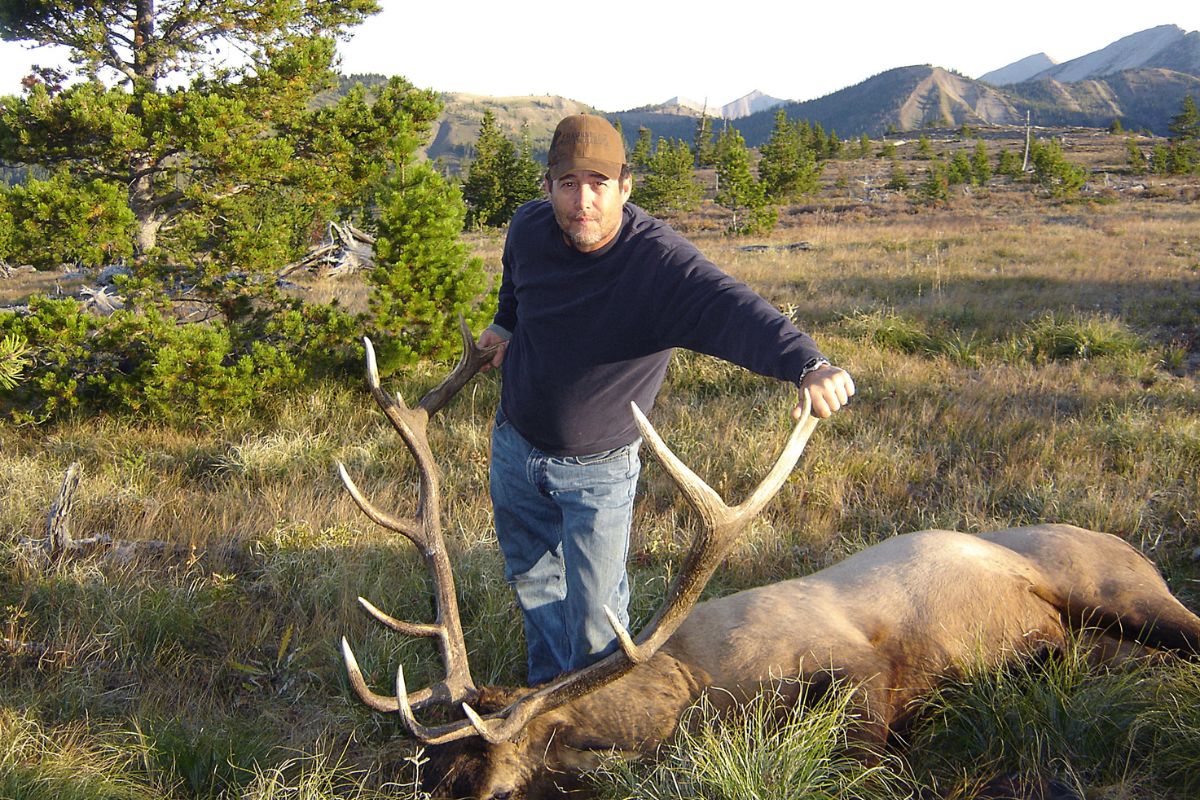
Elk and Mule Deer Hunting in the Big River Country
Our early season hunting camps in Montana are about 20 miles from the trail head – this is a long day’s horseback ride into camp. It also filters out all but a few of the hardiest outdoorsmen. We do see a few other hunters the opening week, but after that we largely have the area to ourselves for the duration of the season. We use horses most every day to get us from camp to the area we want to hunt. This area is huge by anyone’s standard, and it can take 1-2 hours in the dark of early morning to get to a basin or ridge we want to hunt that day. The ridges are fairly open, so we spend considerable time using field glasses looking at the valley floors and far ridges. For elk, mule deer, and black bear, this habitat is prime summer grounds and we can at any time find these species most any area we hunt. We hunt them with different tactics of course.
Elk
In September, the bull elk have assembled their cow elk herds for the rut season (which can vary but usually goes late into September). They will respond to bugle challenges and cow calls. There is very little more exhilarating than to call in an aggressive bull elk who is on the fight! The herd bulls are the toughest to get to, but there are bulls roaming still picking up random cows and the satellite bulls will stay safe distances from the main herds, and they can be a lot of fun to bring in as well. Towards the end of September the rut tapers off and while the bulls will stay with the cow herds for a couple more weeks, they are less responsive to calls. Thus, we shift to more classic spot and stalk methods of hunting as we move into October. The more frequent snow flurries can help with spotting and tracking as well. The elk will stay in these high mountain basins for as long as they can, with the snow belly deep sometimes. We endeavor to be out of this high country before the snow gets anywhere near that deep.


Mule Deer
The mule deer love the high ridges in this area and will stay until the snow starts. Mule deer bucks aggregate into bachelor herds in the summer and pick areas high up in scree slopes and ridgetops to avoid predators and flies, and enjoy the cooler temperatures. We catch them in many areas, often crossing passes between higher ridges. The bucks can be impressive, and for those willing to climb a mountain these are well worth the effort. The bucks will stay in the basins of the continental divide, separate from the doe herds, until late October.
Black Bears & Wolves
The upper Middle Fork is a historically rich area for black bears. It appears they outnumber grizzlies substantially, which is unique to the Bob Marshall. The resident bear population can be solid with a good summer berry crop and other factors.
We also have wolves in this area from time to time. They are difficult to stalk in packs, but pairs or solo wolves will come into elk calls. It’s a unique trophy if the opportunity presents itself.
Landscapes & Elevation
The upper Middle Fork Flathead landscape is highly varied. There is some old growth timber in deep ravines. A wide swath of the timbered country is regrowth lodgpole pine forest from a fire in 1910. Most of the ridges are open, grassy slopes. There are quite a few smaller parks on south facing slopes and drainage basins. Some of this country burned in 2007 and we are starting to see low grade lodgepole move back in.
The Gateway Gorge camp is at 6,200 ft. Strawberry camp is at 5,800 ft. The nearby peaks and the continental divide top out at around 8,400 ft. Most of our hunting is going to be from 5,600 ft to 7,600 ft.

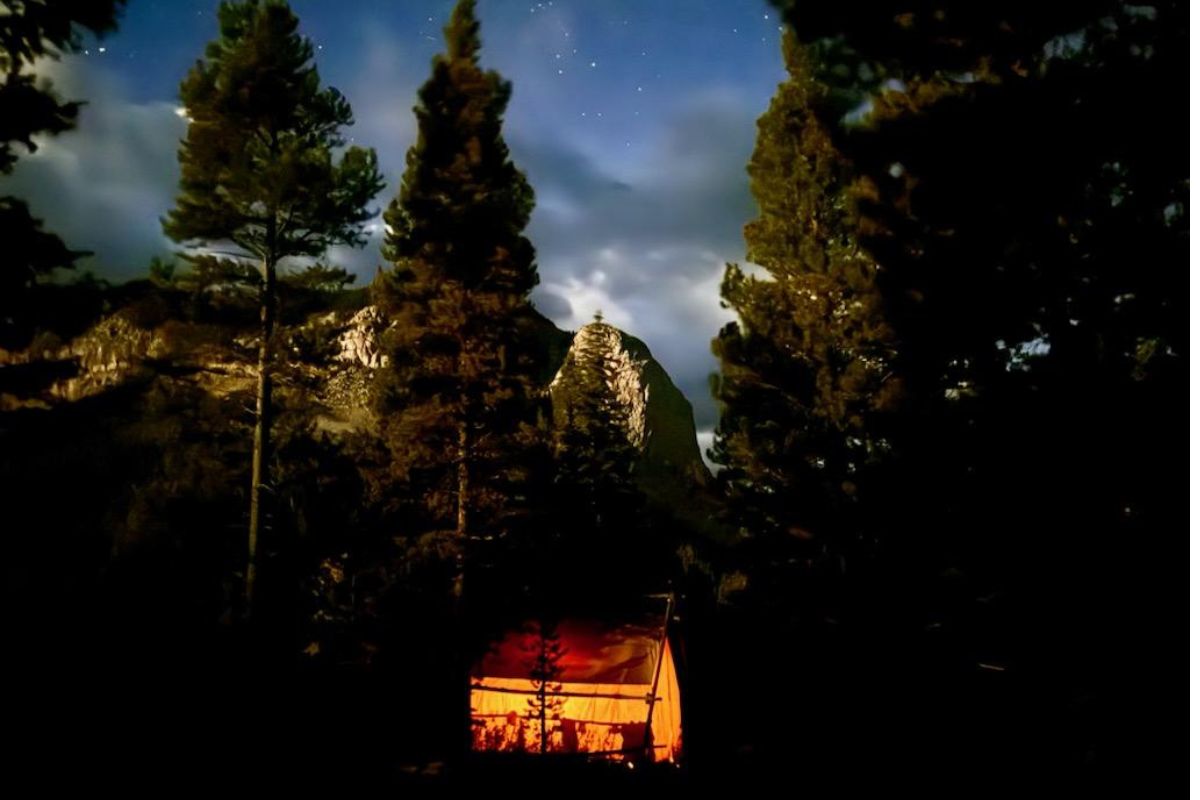
Backcountry Camp Amenities
We use the Gateway Gorge camp as our primary guided hunting camp. We take up to 4 hunters in this camp, with a full complement of staff (guides, packer, cook) and riding and packing stock. As with all of our camps, we have private wall tents with wood stoves for our guests (2 per tent) and a main mess tent, or cook tent, for feeding everyone. We tend to have larger tents to quarter the staff. The Gateway Gorge camp sits at the upper end of Gateway Creek at the base of a 1,000 ft limestone gorge. It makes for a stunning location with amazing views of Gateway Gorge and the Continental Divide.
We use the Strawberry Creek camp as an unguided, or drop camp, and occasionally as a smaller guided hunting camp. We take 2 or 3 hunters in this camp. This camp sits at the head end of Strawberry Creek in a small meadow below Cap Mountain.
Here’s what some of our clients have to say about Circle 8 Outfitters

A great adventure. Got my first muley. Excellent hospitality.
Great time as always! Never a dull moment!
Top drawer operation! The real deal – excellent!
Gear for Early Fall Hunting
There is a lot more detailed information on the specific weather and gear recommendations in the Hunting Gear document nearby.
Consider that you will be hunting mostly in late summer/early fall in Montana. Our September days are warm and sunny, with the occassional rainstorm blowing through. The nights can be cold, with some freezes likely by the end of September. We often are layered up for cold, dark rides in the morning and peeling off layers by 10am. Snow is uncommon, such that raingear is generally sufficient.
Hunting Trip Rates 2026
Hunt Type |
Season / Location |
Duration |
Price |
| Guided Hunts 1 - 3 (elk, deer, bear combination) |
Early rifle season Wilderness |
8 | $7,100.00 |
| Guided Hunts 4 - 5 (elk, deer, bear combination) |
General rifle season Wilderness |
7 | $6,300.00 |
| Guided rifle hunt (mule deer) |
Late rifle season | 5 | $2,675.00 |
| Guided hunt – Big Horn Sheep | Late rifle season Ranch |
5 | $5,000.00* |
| Unguided Hunts 1-3 -DROP CAMPS- (elk/deer combo) |
Early rifle season Wilderness |
8 | $3,300.00** |
* 5 Day Minimum, price reflects 5 day hunt
** Note: Unguided hunts require a 2-person minimum in party.