
Late Season Front Country Hunts
Rock Mountain Front mule deer migrations
Late Season Weather
The weather this time of year will be cold , with wind and snow. It’s open country with some timber for cover from the wind. Expect 6-12 in of snow
Front Range Country
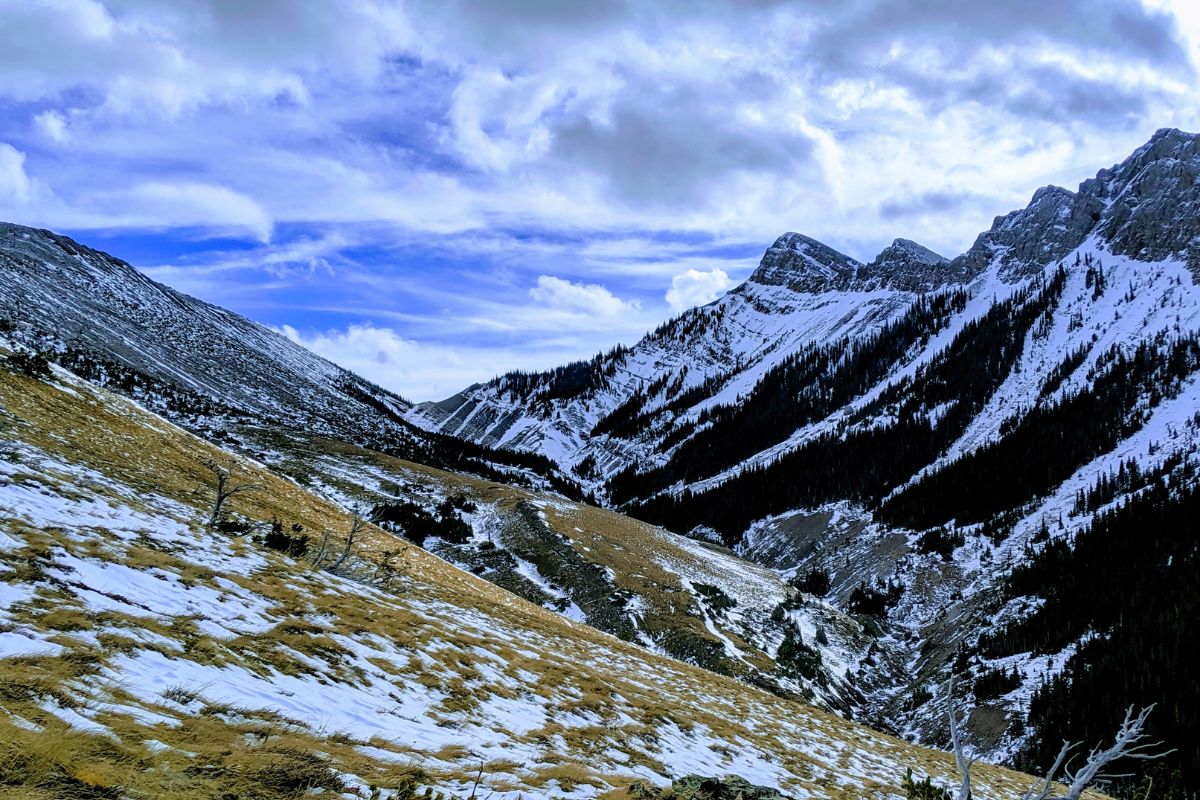
Beautiful if not challenging country. Lots of open hillsides for deer to feed and timber for cover. This is their winter range at the end of their annual migration out of the mountains
Front Range Hunting
We use riding stock extensively to get to the areas we like to hunt. Due to the openness of the landscape we glass a big part of the day as the deer are often at higher elevations.
Migration Mule Deer
Mule deer migrate quite far at times. Our deer summer on the high ridges of the continental divide. The snow moves them out and they arrive in mid November where they will stay until spring.
Hunting the Rocky Mountain Front
This is some of the most spectacular country in the West. The Rocky Mountain front rises abruptly to high mountain peaks directly from the Great Plains of the midwest. This transition is only a couple of miles long before it’s pure mountainous country to the west. The wind blows here constantly in the fall and winter. This clears snow covering from crucial winter feed for the deer and elk. The landscape is open with intermittent jackpine timber and aspen groves which provides important cover for the deer herds.
Mountain Front Hunts available as of 3/14/26
| November 16 – 20 2026 | November 21 – 25 2026 |
| Closed | Closed |

Hunting along the Front
Our mornings start in the dark as we saddle up and head towards the high ridges along the Front. We’ll be in the saddle as daylight arrives and we get to strategic areas to glass the vast open hillsides and timbered draws. There is generally snow on the ground and it’s frequently windy all day. The deer will be congregated in protected hillsides and small parks surrounded by short timber. The mule deer rut has not started yet, but the bucks will be in the near vicinity of the doe herds.
The mule deer spend the summer and early fall in the high mountain peaks of the Continental Divide area. The does and fawns will inhabit the more lush mixed timber zones around 6,500 ft. The bucks form bachelor bands and will spend their time above tree-line where the air is cooler and they have much better sightlines for predators. The mature bucks seldom venture lower until the snow starts to accumulate.
By November all the mule deer will be on their way out of the mountains. They spend congregate on the very front of mountains where they have plenty of timber for protection from the elements and predators. The wind this time of year is particularly fierce and they will often not venture far from the protected open hillsides. The deer begin to aggregate in herds of various sizes as the bucks test their strengths against competitors. The mule deer rut generally begins right after Thanksgiving.

We occassionally see elk traveling through the Rocky Mountain foothills. It’s a little too open for them, but small herds will move through for the same reasons the deer are here – to get to winter feeding ranges. Both elk and deer will end up on the massive open hillsides in the shadow of the mountains in December, and by then you will see vast herds of deer and elk along the mountain front.
We do a lot of glassing for the deer. This country is mostly open, and the deer will be in protected areas relatively high in elevation. There will be snow and wind, so tracking is seldom a problem. However, we like to make sure the deer are in a spot we can get to before engaging pursuit because the terrain and snow can make for difficult and strenous travel by foot. We will use horses to get as close as we can, but invariably we have to be on foot for the last part of the approach.
There is a lot of game in this country, but they have many important advantages including the terrain and lots of eyes and ears. We don’t see too many predators along the front, but they are around. Mainly bears and lions. Wolves are a bit skittish in this open country.
In addition to mule deer and elk, we often will see big horn sheep congregating in the same areas as the deer. They are fun to watch as the rams will be testing their dominancy status by clashing head first into each other as their rut is roughtly coincident with the mule deer. If you are lucky enough to get a big horn sheep tag we have excellent success rates in getting rams for clients.


Because we are hunting from the trailheads, we trailer the stock up each morning to the area we want to hunt. We saddle the riding and packstock each morning in the dark, collect the hunters, and drive to the trailhead. From here we ride the stock an hour or so to get to good vantage points.
We bring packstock so we can get the harvest game out the same day. It makes things more efficient as we can range quite a ways from the trailhead and the days are incredibly short by this time.
We do not provide lodging for our deer hunters during the November hunts. We do have preferred lodging partners in town where you can stay and there are several cafe’s withing walking distance.
Here’s what some of our clients have to say about Circle 8 Outfitters

Best operation I’ve ever seen. Thanks!
This place is the best. Thank you!
Yes. This is the real deal.
Hunting Trip Rates 2026
Hunt Type |
Season / Location |
Duration |
Price |
| Guided Hunts 1 - 3 (elk, deer, bear combination) |
Early rifle season Wilderness |
8 | $7,100.00 |
| Guided Hunts 4 - 5 (elk, deer, bear combination) |
General rifle season Wilderness |
7 | $6,300.00 |
| Guided rifle hunt (mule deer) |
Late rifle season | 5 | $2,675.00 |
| Guided hunt – Big Horn Sheep | Late rifle season Ranch |
5 | $5,000.00* |
| Unguided Hunts 1-3 -DROP CAMPS- (elk/deer combo) |
Early rifle season Wilderness |
8 | $3,300.00** |
* 5 Day Minimum, price reflects 5 day hunt
** Note: Unguided hunts require a 2-person minimum in party.
Late November Gear
There is much more detail in the Hunting Gear Recommendations doc nearby.
The days will be cool, windy, and overcast along the Front in late November. We usually have snow on the ground. Our days are a mix of riding horses and glassing. We do some hiking, but not more than a couple of miles for a day. The openness of this area makes glassing the most efficient way to find game.